The Parthenon’s Optical Magic and Buried Treasures
As participants in Amazon Associates and other programs, we earn from qualifying purchases. This comes at no additional cost to you. For more details, see our Affiliate Disclosure.
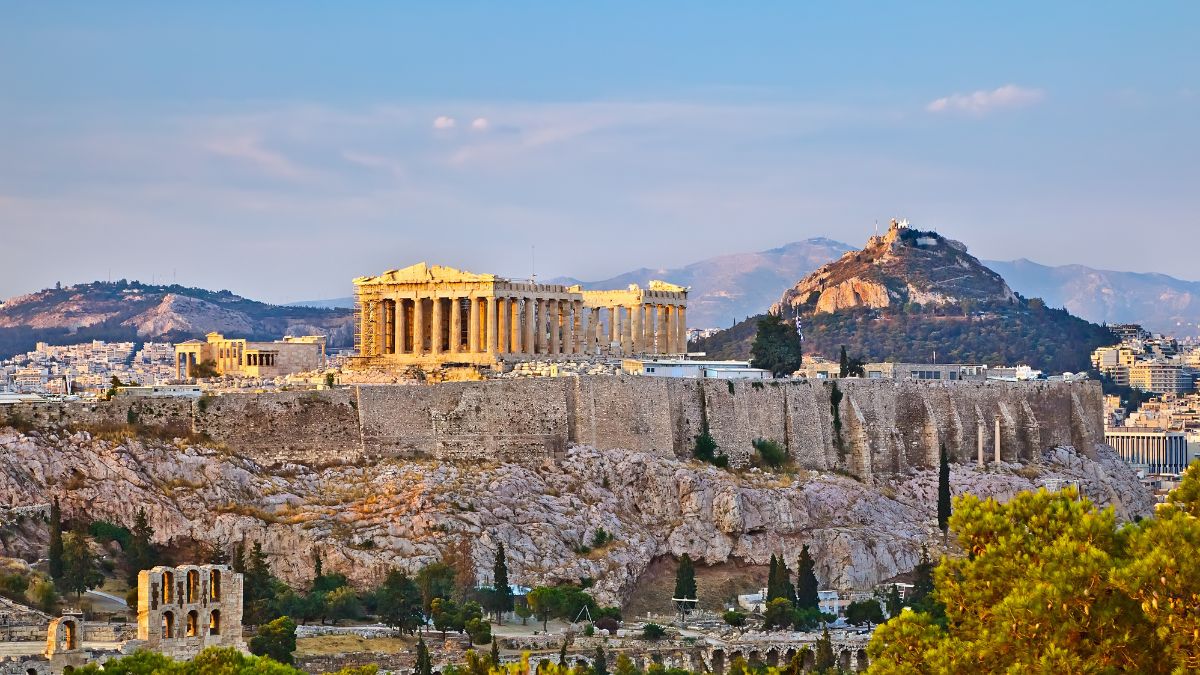
I’m completely captivated by the Parthenon, the iconic temple crowning Athens’ Acropolis in Greece. This isn’t just a gorgeous ruin—it’s a masterpiece of ancient genius, packed with clever tricks and hidden stories that make it way more than a postcard backdrop. Built between 447 and 432 BC to honor the goddess Athena, this marble marvel is a symbol of ancient Greece’s brilliance, and its quirks keep me hooked.
The Parthenon looks like a perfect rectangle, but here’s the wild part: it’s got no straight lines. The architects, Ictinus and Callicrates, used optical illusions to make it seem flawless. The columns bulge slightly in the middle, a trick called entasis, to avoid looking pinched from a distance. The floor curves upward at the center, and the columns lean inward just a touch. These tweaks mess with your eyes, making the temple look impossibly balanced. Standing in front of it, you’d swear it’s mathematically perfect, but it’s all a clever cheat.
Another cool fact? The Parthenon was a giant treasury. It housed Athens’ wealth, including gold and silver offerings to Athena. The star attraction was a 40-foot-tall statue of Athena, covered in ivory and gold plates—over 1,000 kilograms of gold, worth millions today. That statue, crafted by sculptor Phidias, vanished centuries ago, likely looted. But imagine it gleaming inside, reflecting torchlight. The temple’s friezes, carved with gods, heroes, and battles, were painted in bright reds and blues, not the plain white we see now. Picture it glowing like a comic book.
Here’s a quirky bit: the Parthenon has been a shape-shifter. It started as a Greek temple, became a Christian church, then a mosque under Ottoman rule, complete with a minaret. In 1687, it was a gunpowder store—big mistake. A Venetian cannonball hit it, causing an explosion that blew off the roof and wrecked parts of the structure. That’s why it’s half-ruined today. Yet, it still stands, defiant after wars, looters, and time.
The Parthenon’s sculptures, called the Elgin Marbles, sparked a modern saga. In the early 1800s, Lord Elgin took about half of them to Britain, and they’re now in the British Museum. Greece wants them back, arguing they were looted. It’s a heated debate that keeps the Parthenon in the news. Meanwhile, recent digs found hidden carvings under the Acropolis, including graffiti from ancient workers, like doodles or names scratched during breaks.
Building it was a massive feat. Over 20,000 tons of marble were hauled from a mountain 10 miles away, carved with precision, and assembled without mortar. It cost a fortune—equivalent to billions today—bankrolled by Athens’ silver mines and war spoils. Today, it’s a UNESCO World Heritage Site, drawing 7.2 million visitors yearly. Restoration work battles pollution and earthquake risks, but climbing the Acropolis to see it up close is worth every step.
The Parthenon isn’t just a temple—it’s an optical puzzle, a lost treasure vault, and a survivor of chaos. If you visit Athens, catch it at sunset when the marble glows gold, or imagine Athena’s statue shining inside. It’s a piece of history that still plays tricks on your eyes and tugs at your imagination.