
Taj Mahal’s Clever Illusions and Hidden Heartbreak
As participants in Amazon Associates and other programs, we earn from qualifying purchases. This comes at no additional cost to you. For more details, see our Affiliate Disclosure.
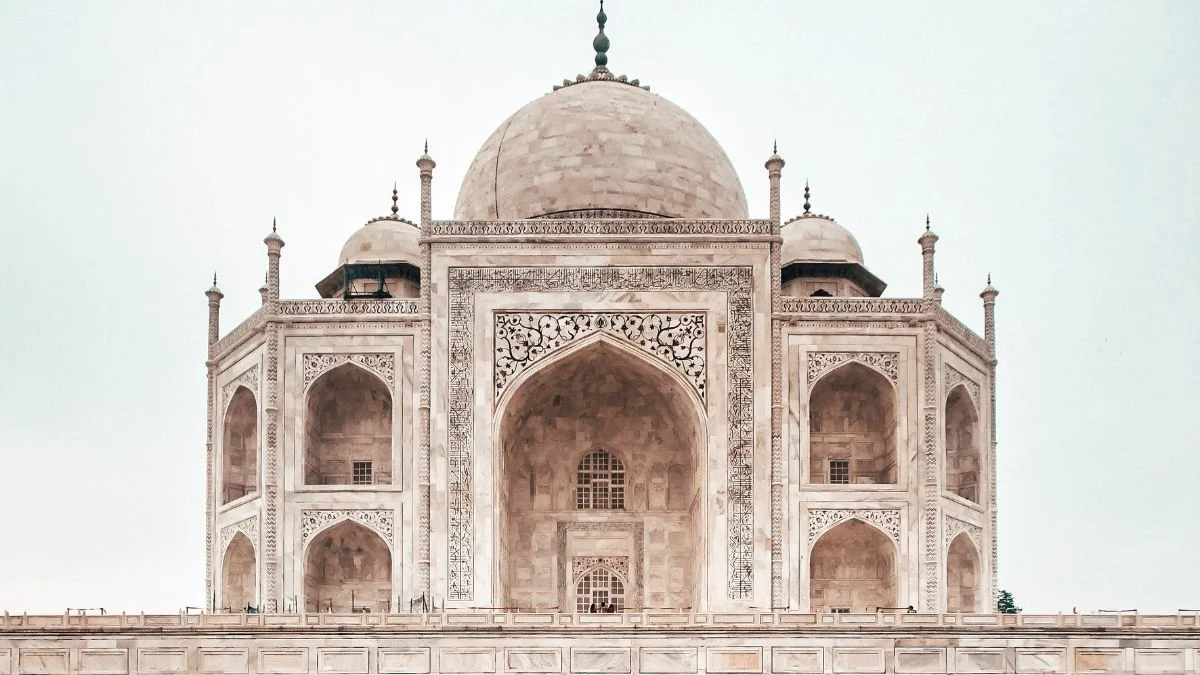
I’m utterly enchanted by the Taj Mahal in Agra, India. This ivory-white marble masterpiece isn’t just a stunning monument—it’s a love story carved in stone, brimming with fascinating tricks and poignant secrets that make it far more than a tourist gem. Built between 1632 and 1653, it’s a UNESCO World Heritage Site that leaves me in awe every time I think about it.
Emperor Shah Jahan commissioned the Taj Mahal as a tomb for his beloved wife Mumtaz Mahal, who died giving birth to their 14th child. The emperor was so heartbroken that he poured his grief into creating a monument to rival heaven itself. Over 20,000 workers and 1,000 elephants labored for two decades, crafting a structure so breathtaking it’s called a “teardrop on the cheek of time.” But here’s the sad twist: Shah Jahan was overthrown by his son and imprisoned in Agra Fort, where he spent his final years gazing at the Taj Mahal from a window, unable to visit his wife’s tomb.
Now, check this out—the Taj Mahal plays optical tricks. Its minarets, the four towers at the corners, lean slightly outward. This isn’t a mistake—it was designed to protect the main dome. If an earthquake hits, the minarets would fall away from the tomb, not onto it. And when you approach the main gate, the Taj seems to shrink as you get closer, then grow massive as you step through. It’s an architectural mind game that makes every visit feel surreal.
Another cool fact? The Taj Mahal changes color. Its white marble shifts hues with the light—pink at dawn, golden at sunset, and silvery under moonlight. The builders picked marble that reflects light like a mood ring, making it feel alive. They also inlaid the walls with semi-precious stones—jasper, jade, lapis lazuli—in delicate floral patterns that took years to perfect. Some stones glow faintly in the dark, adding a magical vibe.
Here’s a quirky detail: the Taj has perfect symmetry, but with one exception. Shah Jahan planned to be buried next to Mumtaz, so their tombs are side by side. Her tomb is dead center, but his was added later, slightly off to the side, breaking the balance. It’s like a tiny flaw in a perfect love story, reminding us life isn’t always neat.
The Taj wasn’t cheap—it cost about 32 million rupees back then, roughly a billion dollars today. Workers came from across Asia, and materials like marble were hauled from 200 miles away. Despite its beauty, it took a toll—Shah Jahan’s obsession drained the treasury, fueling his son’s coup. Over time, the Taj faced neglect, pollution, and even British soldiers chipping away stones as souvenirs. Modern India fights to keep it pristine, with 7 million visitors yearly marveling at its glow.
The Taj Mahal isn’t just a pretty building. It’s a heartbreak monument, an optical puzzle, and a color-shifting wonder. If you go to Agra, stand at the gate and watch it play with your eyes, or catch it at dusk when it blushes gold. It’s a love letter in marble that still tugs at the heart.