10 Best Summer Destinations in Croatia for Stunning Coastlines, Ancient Towns, and Islands
As participants in Amazon Associates and other programs, we earn from qualifying purchases. This comes at no additional cost to you. For more details, see our Affiliate Disclosure.
Croatia is a magnet for summer travellers, and it’s easy to see why. When thinking about the best summer destinations in Croatia, images of shimmering Adriatic waters, historic walled cities, and idyllic islands immediately spring to mind. Finding places that offer that perfect blend of stunning coastlines, fascinating ancient towns, and charming Islands is what makes a trip here so special.
The country offers an incredible stretch of coast dotted with countless islands, each with its own character. You can move easily from exploring Roman ruins or Venetian architecture to diving into crystal-clear waters or relaxing on a sun-drenched beach. Let’s dive into ten spots where you can experience the best of Croatian summer.
Dubrovnik
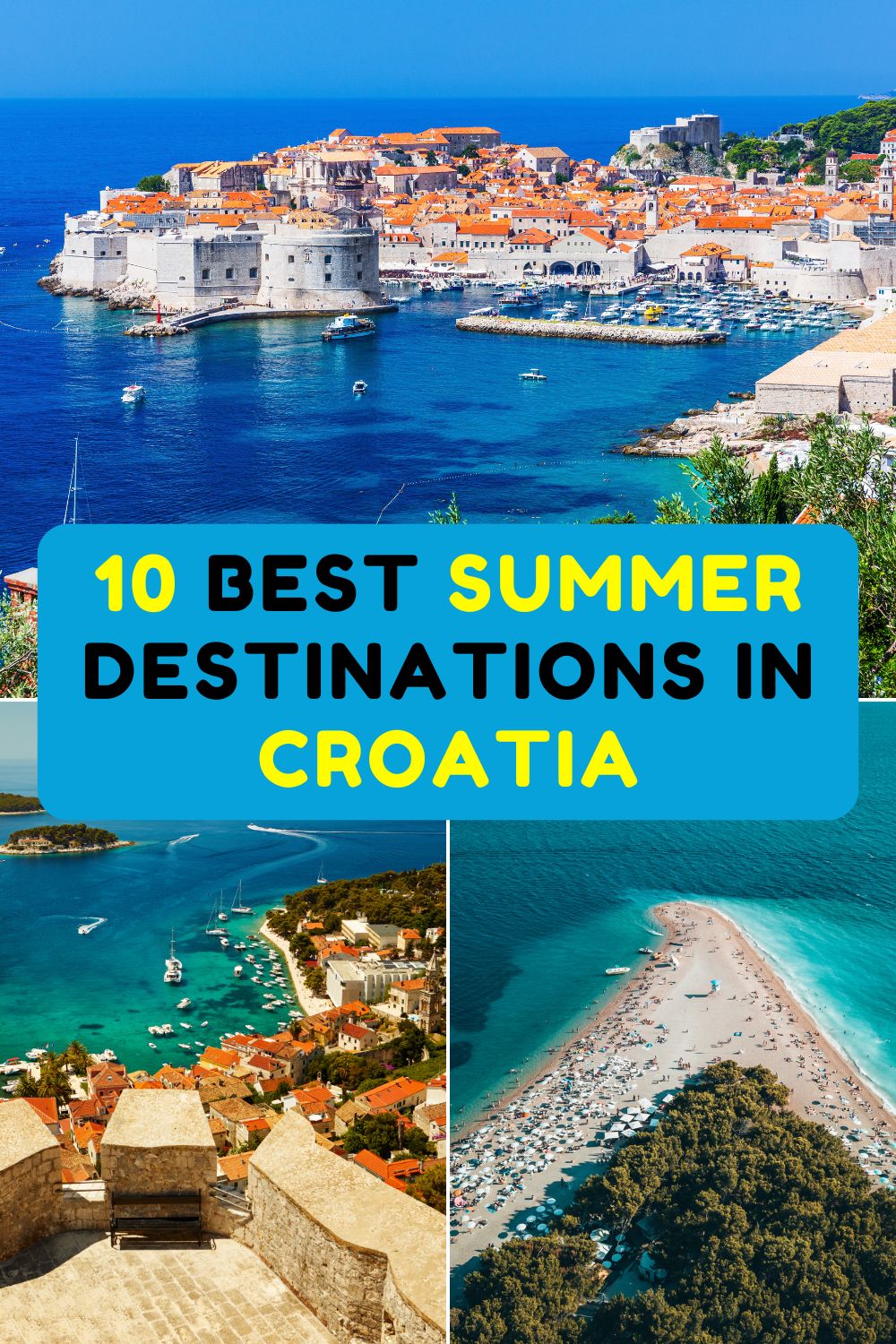
Often called the ‘Pearl of the Adriatic’, Dubrovnik’s beauty is undeniable. Its main draw is the incredibly well-preserved medieval Old Town, encircled by massive stone walls you can walk along for amazing views. Inside, limestone-paved streets lead to baroque churches, aristocratic palaces, and charming squares. Just outside the walls, beaches like ‘Banje’ offer swimming with a view of the city.
Getting lost in the Old Town’s maze-like streets is part of the fun. You can take a cable car up Mount Srđ for breathtaking panoramic views of the city, the coast, and nearby islands. Fans might recognise many locations from the ‘Game of Thrones’ series. Dubrovnik gets very crowded in summer, so visiting early or late in the day helps, or consider exploring the nearby Lokrum island for a peaceful escape.
Split
Split is a vibrant city where ancient history lives alongside modern life. The heart of the city is Diocletian’s Palace, a vast Roman complex built in the 4th century that now forms the core of the Old Town. Wandering through its ancient cellars, courtyards, and alleyways, now filled with shops, cafes, and apartments, is a unique experience. The ‘Riva’ promenade is perfect for people-watching and enjoying the sea breeze.
Beyond the palace walls, climb Marjan hill for great views over the city and harbour, or relax at local beaches like ‘Bačvice’, known for its sandy bottom and the traditional game of ‘picigin’. Split is also a major transport hub, making it an excellent starting point for exploring nearby islands like Brač, Hvar, and Vis via the frequent ferry services.
Hvar Island
Hvar is often seen as Croatia’s sunniest and most glamorous island. Hvar Town itself is buzzing, with a beautiful main square dominated by St. Stephen’s Cathedral, a hilltop fortress offering panoramic views, and a harbour filled with impressive yachts. Just offshore, the Pakleni Islands archipelago offers stunning coves and beaches perfect for a day trip by boat taxi.
But Hvar offers more than just glitz. Explore quieter inland villages surrounded by lavender fields (fragrant in early summer) and vineyards. The Stari Grad Plain, a UNESCO World Heritage site, showcases ancient Greek agricultural land division still in use today. The island has numerous beaches, from popular spots near Hvar Town to more secluded coves accessible by boat or car.
Korčula Island
Often described as a ‘mini-Dubrovnik’, Korčula Town is a beautiful walled medieval city sitting on a small peninsula. Its narrow streets are arranged in a clever herringbone pattern to maximise airflow and provide shade. Explore St. Mark’s Cathedral and wander the charming alleyways. The island is also linked to the famous explorer Marco Polo, with his supposed birth house being a popular, if historically debatable, attraction.
Korčula is known for its dense pine forests, vineyards producing excellent local white wines like Pošip and Grk, and lovely pebble beaches often found in secluded bays. Don’t miss the chance to see the traditional ‘Moreška’ sword dance if you get the opportunity, a dramatic performance unique to Korčula Town. The island feels a bit more laid-back than Hvar.
Rovinj (Istria)
Up on the Istrian peninsula in the north, Rovinj is incredibly picturesque. This fishing port turned tourist favourite features colourful houses packed tightly together on a small peninsula, rising towards the hilltop Church of St. Euphemia, whose bell tower offers fantastic views. The narrow, cobbled streets are filled with art galleries, boutiques, and inviting restaurants.
The coastline around Rovinj is mostly rocky or pebbly, with clear waters perfect for swimming. You can find nice spots on the nearby ‘Zlatni Rt’ (Golden Cape) forest park, ideal for walking and cycling too. Istria has a strong Italian influence, reflected in its cuisine – expect excellent pasta, truffles, olive oil, and local wines like Malvasia and Teran.
Zadar
Zadar offers a fascinating mix of ancient history and modern innovation on the northern Dalmatian coast. Explore the Roman Forum ruins, wander through medieval streets, and visit historic churches like the unique circular St. Donatus Church. The city walls and gates add to its historical charm.
What makes Zadar stand out are its unique modern attractions on the waterfront promenade. The ‘Sea Organ’ uses waves to create hauntingly beautiful sounds, while the ‘Greeting to the Sun’ puts on a dazzling light show powered by solar energy after sunset. Zadar also serves as a great base for exploring nearby national parks like Kornati Islands (by boat) and Paklenica (for hiking).
Pula (Istria)
Also located in Istria, Pula is best known for its remarkable Roman heritage. The star attraction is the Pula Arena, a magnificent and exceptionally well-preserved Roman amphitheatre right in the city centre, which still hosts concerts and events today. You can also explore the Roman Forum with the Temple of Augustus and the Triumphal Arch of the Sergii.
While the city centre focuses on history, lovely beaches and rocky coves can be found on the nearby Verudela peninsula, easily reached by local bus. Pula is also the gateway to the Brijuni Islands National Park, a fascinating archipelago known for its natural beauty, historical sites (including Roman villas and dinosaur footprints), and Tito’s former summer residence.
Mljet Island
For those seeking nature and tranquility, Mljet is a perfect choice. A large part of the western island is a designated National Park, famous for its two interconnected saltwater lakes, Veliko and Malo Jezero (Big and Small Lake). You can swim, kayak, or cycle around the lakes on shaded paths. In the middle of the Big Lake sits the tiny Isle of St. Mary with its picturesque 12th-century Benedictine monastery.
Mljet is one of Croatia’s greenest islands, covered in dense forests. Outside the park, you’ll find quiet villages, hidden coves, and small sandy beaches like ‘Saplunara’. Life moves slowly here, making it ideal for unwinding and connecting with nature. Ferries connect Mljet to Dubrovnik and the Pelješac peninsula.
Vis Island
Vis was closed to foreign visitors until 1989 due to its use as a military base, which helped preserve its authentic charm and stunning natural beauty. It feels more remote and rugged than some other popular islands. Vis Town and the fishing village of Komiža are delightful bases for exploring. The island is dotted with beautiful, often secluded coves, including the famous ‘Stiniva’ beach, accessible via a steep path or by boat.
Nearby, the islet of Biševo hosts the magical ‘Blue Cave’ (‘Modra špilja’), best visited mid-morning when sunlight creates an incredible blue glow inside. Vis is also known for its local Vugava white wine and was a filming location for ‘Mamma Mia! Here We Go Again’. Renting a scooter or car is a great way to explore its hidden corners.
Makarska Riviera
Stretching for about 60 kilometres along the mainland coast between Split and Dubrovnik, the Makarska Riviera is famed for its long, beautiful pebble beaches nestled at the foot of the dramatic Biokovo mountain range. Towns like Makarska, Brela, and Baška Voda are popular resorts offering clear waters, pine-shaded promenades, and plenty of amenities.
The proximity of Mount Biokovo offers fantastic opportunities for hiking and enjoying breathtaking views over the coast and islands (Biokovo Nature Park). While it can get busy, the sheer length of the coastline means you can often find quieter spots. It’s a great option if you want easy access to stunning beaches combined with dramatic mountain scenery without needing to hop on a ferry.