Why Flight Attendants Check Your Shoes When Boarding
As participants in Amazon Associates and other programs, we earn from qualifying purchases. This comes at no additional cost to you. For more details, see our Affiliate Disclosure.
Most passengers assume the boarding process is purely logistical — a choreographed shuffle of tickets, overhead bins, and seat assignments. What many travelers never notice is that flight attendants are quietly conducting a safety assessment the moment you step through the cabin door, and your footwear is a key part of that scan.
It seems counterintuitive that a pair of shoes could affect aviation safety, but the reasoning runs deeper than airline etiquette. The type of footwear a passenger wears can directly determine how quickly — and safely — an entire plane evacuates in an emergency scenario.
Your Shoes Are a Critical Variable in Emergency Evacuation Survival
Aviation safety protocols are built around 1 brutal statistical benchmark: all passengers must be able to evacuate a commercial aircraft in under 90 seconds. High-heeled shoes present a direct threat to that window, as they can puncture or tear the inflatable evacuation slides that deploy from the aircraft doors. According to aviation safety experts, passengers are typically asked to remove high-heeled shoes before using an evacuation slide precisely because of this structural risk.
The same protocol, however, creates a secondary hazard that is less discussed: once passengers are outside the aircraft, being barefoot on debris-covered tarmac, hot asphalt, or rough terrain can cause serious injuries. This is why flight attendants are trained to make nuanced footwear assessments — not simply flag all non-flat shoes, but identify which specific shoe types pose the greatest slide-integrity risk during boarding.
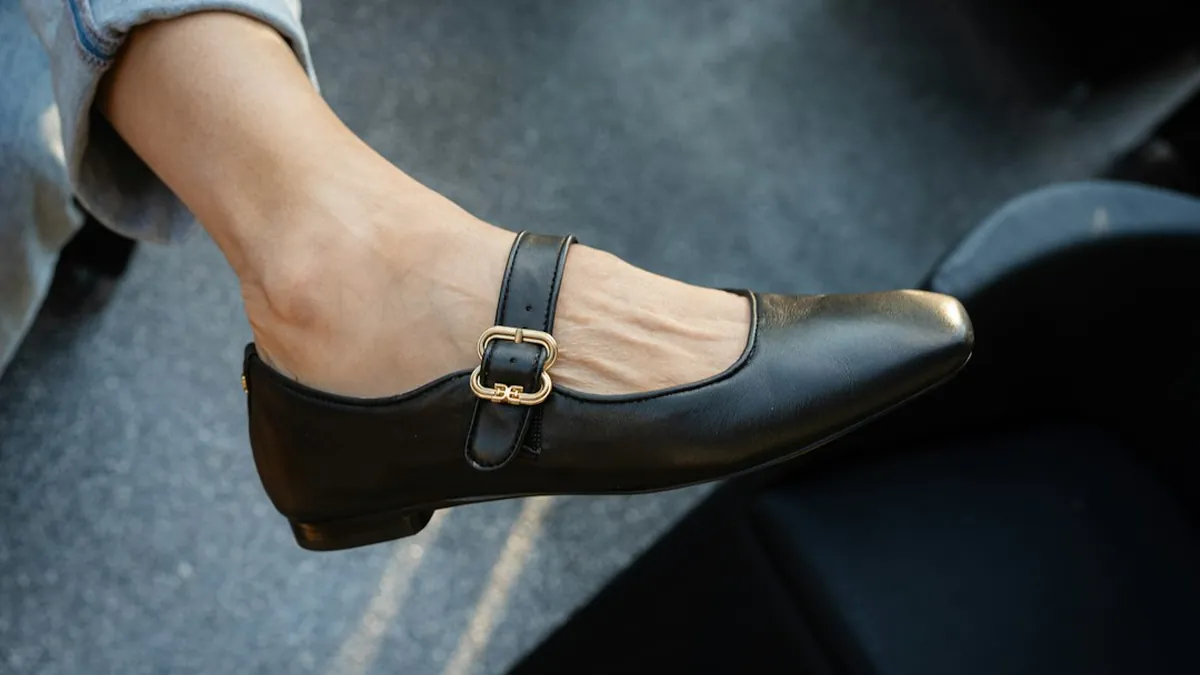
Shoe Grip and Passenger Mobility Are Equally Factored Into the Safety Equation
Beyond slide damage, footwear directly affects how fast passengers can move through a narrow cabin aisle under stress. Research into heel kinematics and slip mechanics has quantified how different shoe-floor friction levels affect human movement during sudden, uncontrolled situations — findings that are directly applicable to aircraft cabin flooring conditions. Slippery soles, platform shoes, or open-toed sandals that can catch on seat tracks all reduce the speed and stability of emergency movement.
For travelers who frequently fly and want to stay ahead of every procedural detail — much like understanding the boarding pass security risks most people overlook — choosing closed-toe, flat-soled shoes for flights is one of the simplest and most effective safety decisions you can make. Flight attendants are far less likely to intervene or issue reminders during boarding when passengers are already wearing footwear that meets the unspoken safety standard.
Understanding why flight attendants check shoes during boarding reframes the entire experience — it is not an invasion of personal style, but a rapid, trained safety triage that could shave critical seconds off an evacuation. The next time you feel that quiet glance at your feet as you board, know it is 1 of the most consequential 2-second assessments in modern travel safety — and we’d love to hear in the comments whether this changes how you think about your flight-day footwear choices.