India Agrees World Bank Funding for Nine Kashmir Tourist Sites

As participants in Amazon Associates and other programs, we earn from qualifying purchases. This comes at no additional cost to you. For more details, see our Affiliate Disclosure.
The Indian government advances a formal pact with the World Bank to develop nine untapped tourist spots in the Kashmir Valley, aiming to diversify beyond established circuits. This initiative allocates resources for infrastructure upgrades, including access roads, visitor centers, and eco-friendly accommodations at high-altitude lakes and alpine meadows. Regional authorities target a 20 percent rise in off-season arrivals through integrated promotional campaigns.
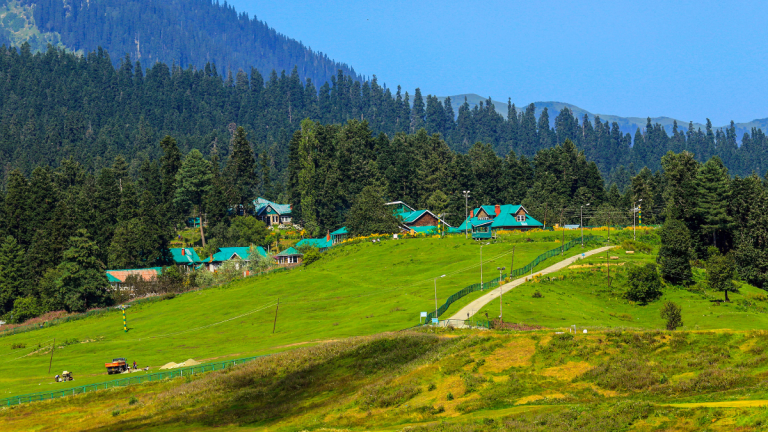
The agreement covers sites like Naranag’s ancient Shiva temples, Gadsar’s pristine alpine lake, and the snow-capped Kolahoi Glacier trails, spanning 500 square kilometers across central and northern districts. Funding totals $150 million over five years, with 60 percent disbursed in the first phase for feasibility studies and land acquisitions. Jammu and Kashmir Tourism Department coordinates site assessments, prioritizing seismic-resistant designs given the Himalayan terrain’s vulnerability.
Marketing efforts emphasize sustainable practices, such as waste management systems and community-led homestays, to engage 5,000 local households. Digital campaigns launch on platforms like Incredible India, highlighting biodiversity with over 120 bird species and rare Himalayan flora. The World Bank mandates environmental impact audits, limiting construction to 10 percent of each site’s footprint to preserve glacial feeds.
This year challenges tourism with incidents including the Pahalgam attack, Delhi blast, and Nowgam explosion, reducing arrivals by 15 percent to 1.2 million from 2024 peaks. Chief Minister Omar Abdullah notes slight recovery via new attractions like the Chrysanthemum Garden in Srinagar, drawing 50,000 visitors in its debut season. The pact requires quarterly progress reports, with disbursements tied to security enhancements like 24-hour patrols.
Infrastructure includes 200 kilometers of upgraded trekking paths and solar-powered rest stations, connecting sites via shuttle services from Srinagar’s Sheikh ul-Alam Airport. Training programs equip 2,000 youth in guiding and hospitality, boosting employment in a region with 12 percent unemployment. International partnerships with UNESCO explore heritage listings for three sites, enhancing global appeal.
Visitor guidelines enforce no-plastic zones and carrying capacity limits of 500 daily per site to mitigate overcrowding. Revenue projections estimate $80 million annually post-development, with 40 percent reinvested in conservation funds. Border proximity prompts joint security protocols with Indian Army units, including drone surveillance over key access points.
The initiative aligns with India’s national tourism policy, targeting 30 billion annual inbound trips by 2030. Local stakeholders, including the Kashmir Hoteliers Association, commit to pricing caps at 20 percent below urban rates to attract budget travelers. Monitoring uses GIS mapping for real-time crowd data, integrated into a dedicated app for bookings and alerts.
Broader economic ripple effects include supply chain boosts for handicrafts and organic farming, supporting 10,000 artisans. World Bank experts conduct baseline biodiversity surveys, documenting 300 floral varieties for protected status. Completion timelines set full operations by 2028, with pilot access to two sites opening next summer.
This development counters seasonal dips, extending viable tourism windows from four to eight months yearly. Collaboration extends to adventure operators for paragliding and rafting permits, regulated under adventure tourism guidelines. The agreement underscores multilateral financing’s role in conflict-affected regions, fostering stability through economic integration.