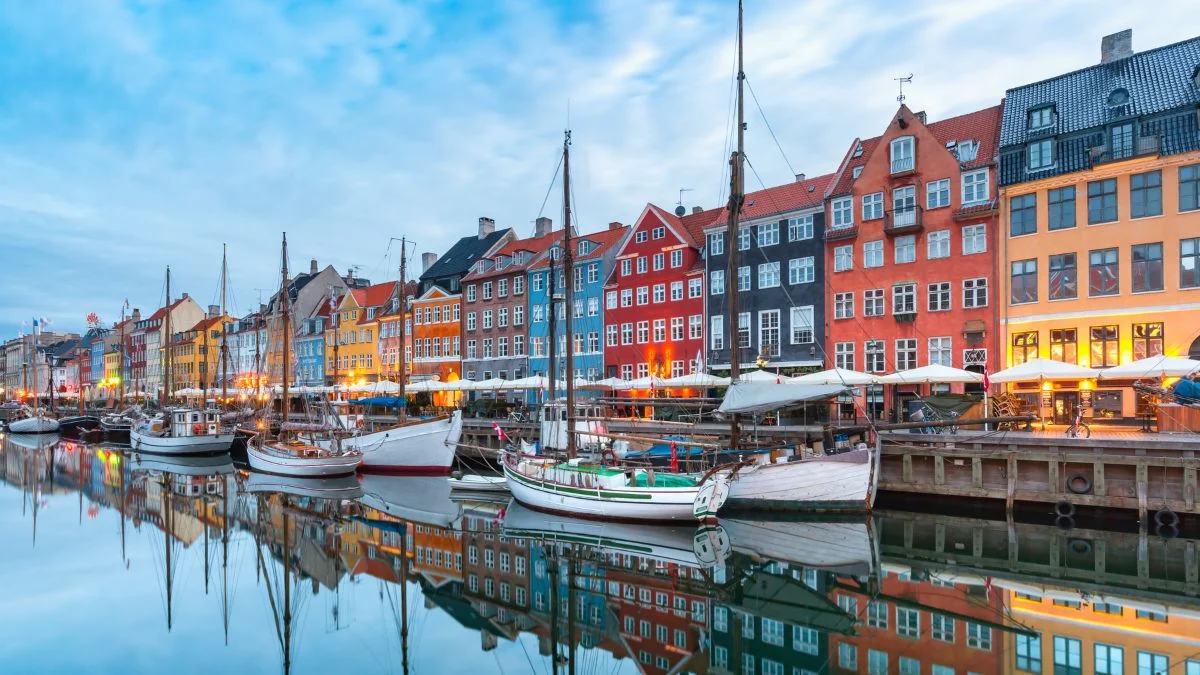
Copenhagen Claims Top Spot as World’s Most Liveable City in 2025
As participants in Amazon Associates and other programs, we earn from qualifying purchases. This comes at no additional cost to you. For more details, see our Affiliate Disclosure.
The race for the world’s most liveable city has a new winner. Copenhagen, Denmark’s vibrant capital, has snagged the number one spot in the 2025 Global Liveability Index by the Economist Intelligence Unit (EIU). After three years of Vienna dominating the list, this shift marks a fresh chapter for urban rankings.
The EIU evaluated 173 cities worldwide, looking at factors like healthcare, education, stability, infrastructure, and environment. Copenhagen earned perfect scores in stability, education, and infrastructure, showcasing its strength as a well-rounded city. Its bike-friendly streets, green spaces, and efficient public services make it a standout. The city’s commitment to sustainability, with initiatives like expansive cycling networks and renewable energy projects, adds to its appeal.
Vienna, Austria, which held the top spot for years, slipped to a shared second place with Zurich, Switzerland. The drop came after a dip in Vienna’s stability score, partly due to a bomb threat that canceled a Taylor Swift concert last summer. Despite this, Vienna remains a cultural gem, known for its historic architecture, world-class museums, and thriving coffeehouse scene.
Melbourne, Australia, held steady at fourth place, continuing to shine with its lively arts scene and strong public services. Geneva, Switzerland, rounded out the top five, offering stunning views of Lake Geneva and a high quality of life. Sydney climbed to sixth, while Osaka, Japan, and Auckland, New Zealand, tied for seventh. Adelaide, Australia, and Vancouver, Canada, completed the top ten, showcasing the strength of medium-sized cities.
Some cities faced challenges. Canadian cities like Calgary and Toronto dropped in the rankings due to strained healthcare systems, with long wait times for medical care. Calgary fell from fifth to 18th, while Toronto slid to 16th. The EIU noted that Canada’s healthcare struggles have impacted its cities’ scores, though they remain highly liveable.
In the UK, London, Manchester, and Edinburgh also saw declines, driven by lower stability scores after unrest tied to a misinformation-fueled incident in Southport last year. London dropped to 54th, Manchester to 52nd, and Edinburgh to 64th. These shifts reflect broader global trends, with stability scores falling in regions like Western Europe, Asia, and the Middle East.
On the rise, Al Khobar in Saudi Arabia jumped 13 places to 135th, thanks to investments in healthcare and education under the country’s Vision 2030 plan. Jakarta, Indonesia, also climbed ten spots to 132nd, boosted by improved stability. At the bottom, Damascus, Syria, remained the least liveable city, followed by Tripoli, Libya, and Dhaka, Bangladesh.
Honolulu, Hawaii, led U.S. cities at 23rd place. Smaller and medium-sized American cities often outperform larger ones like New York or Los Angeles, where public services face more pressure. The EIU’s findings show that global liveability has stayed flat this year, with gains in healthcare and education offset by declines in stability.
Copenhagen’s rise feels like a win for cities prioritizing balance and sustainability. I can’t help but think its cozy cafes and waterfront charm make it a place worth visiting—or even calling home.