Why You Shouldn’t Connect Laptops to Hotel TVs
As participants in Amazon Associates and other programs, we earn from qualifying purchases. This comes at no additional cost to you. For more details, see our Affiliate Disclosure.
Hotel rooms have quietly become mobile offices for millions of business travelers, and the temptation to mirror a laptop onto the room’s large smart TV is completely understandable. A bigger screen, a more comfortable chair, and the illusion of a proper workspace — it feels like a reasonable upgrade after a long day of flights and meetings. Most guests never give it a second thought.
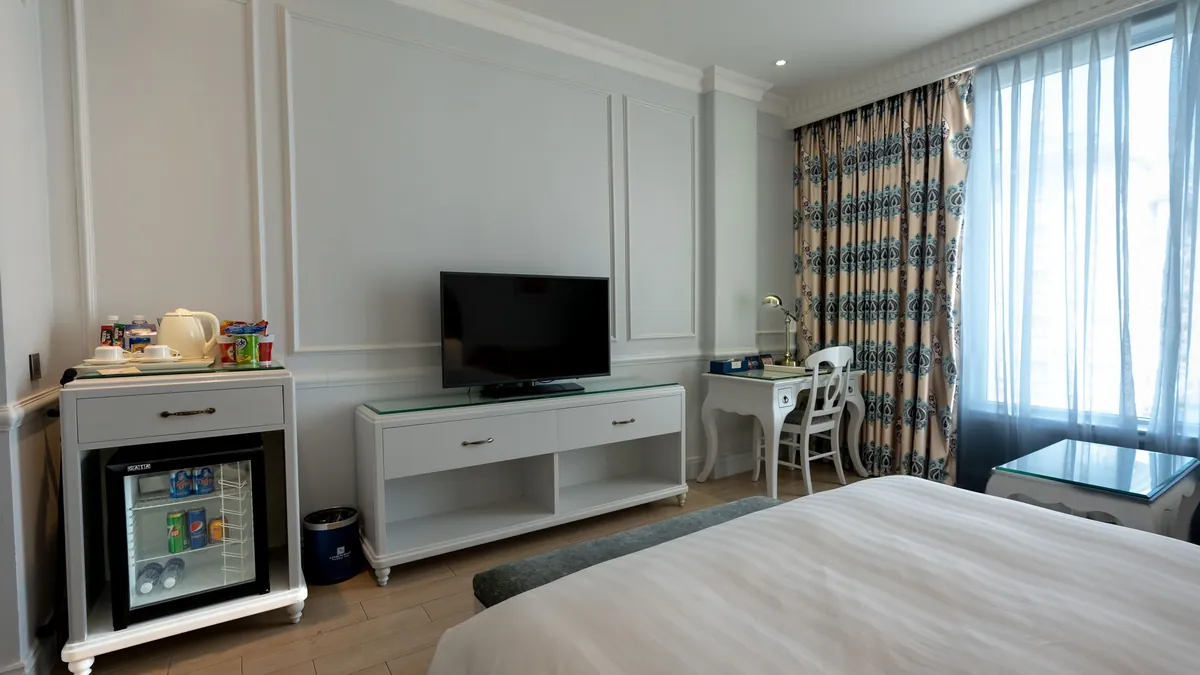
The problem is that hotel TVs are not passive displays sitting harmlessly on a dresser. They are networked, software-driven devices sharing infrastructure with dozens — sometimes hundreds — of other guests, and that changes everything about how safe the connection actually is. The same instinct that makes travelers wary of budget hotel warning signs should apply to the technology inside the room, not just the mattress.
Hotel Smart TVs Carry Exploitable Vulnerabilities That Put Guest Devices at Risk
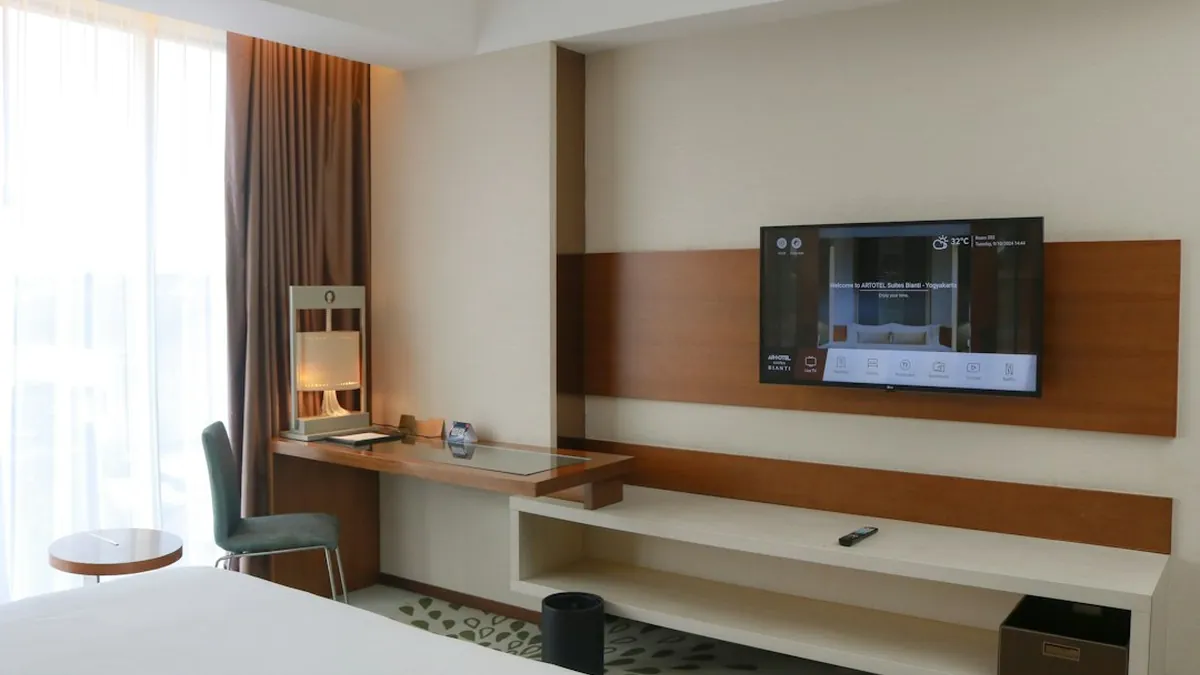
Security researchers have uncovered a chain of flaws in popular hotel smart TV platforms that allows an attacker on the same local network to seize total root control over the device — without a single PIN prompt or user interaction, as detailed in reporting on LG smart TV vulnerabilities. Once a TV is compromised at that level, it becomes an active node on the network rather than a dumb display. Any laptop connected to it — whether via HDMI or a wireless screen-sharing protocol — is now operating in a compromised environment.
The broader hotel IoT attack surface makes this worse, not better. Smart TVs, in-room tablets, connected thermostats, and IP-based door locks frequently share the same network segment as guest devices, meaning a single compromised device can become a pivot point into the entire estate. According to Purple’s hotel WiFi security guide, business travelers consistently underestimate how flat and poorly segmented hotel networks tend to be.
Credential Harvesting and Account Persistence Are the Real Dangers of Shared Displays
Beyond network-level attacks, the act of logging into streaming services or work applications on a hotel TV creates a separate and underappreciated risk: account persistence. Many smart TV platforms cache login tokens and session data even after a user manually logs out, leaving credentials accessible to the next guest or a bad actor with physical access. This is especially dangerous for corporate accounts, where a single harvested session token can open access to cloud storage, email, or internal tools.
On the hardware side, the picture is slightly more nuanced. HDMI ports are primarily output devices and do not support writing to a connected computer, which does reduce 1 specific category of attack risk. However, this technical reassurance does not extend to wireless mirroring protocols like Miracast or screen-sharing apps, which establish bidirectional data channels and represent a meaningfully larger exposure. The safest strategy for any business traveler is to treat the hotel TV as entirely untrusted infrastructure and use a personal portable monitor instead.
Laptop security in a hotel TV context is ultimately about understanding that convenience and safety are pulling in opposite directions. Every cable plugged in and every wireless session initiated is a calculated risk inside an environment designed for hospitality, not cybersecurity. Share your own experiences with hotel tech security in the comments — have you ever thought twice before connecting to a room’s display?